Every job below is one we do ourselves across West Allis.
We dig footings below the frost line, usually around 42 inches here, and frame the joists 16 inches on center so the decking doesn't bounce. Ledger boards get flashed and bolted into the rim joist, not just screwed to siding. You get a deck that holds its shape through the freeze-thaw cycle instead of pulling away from the house in year three.
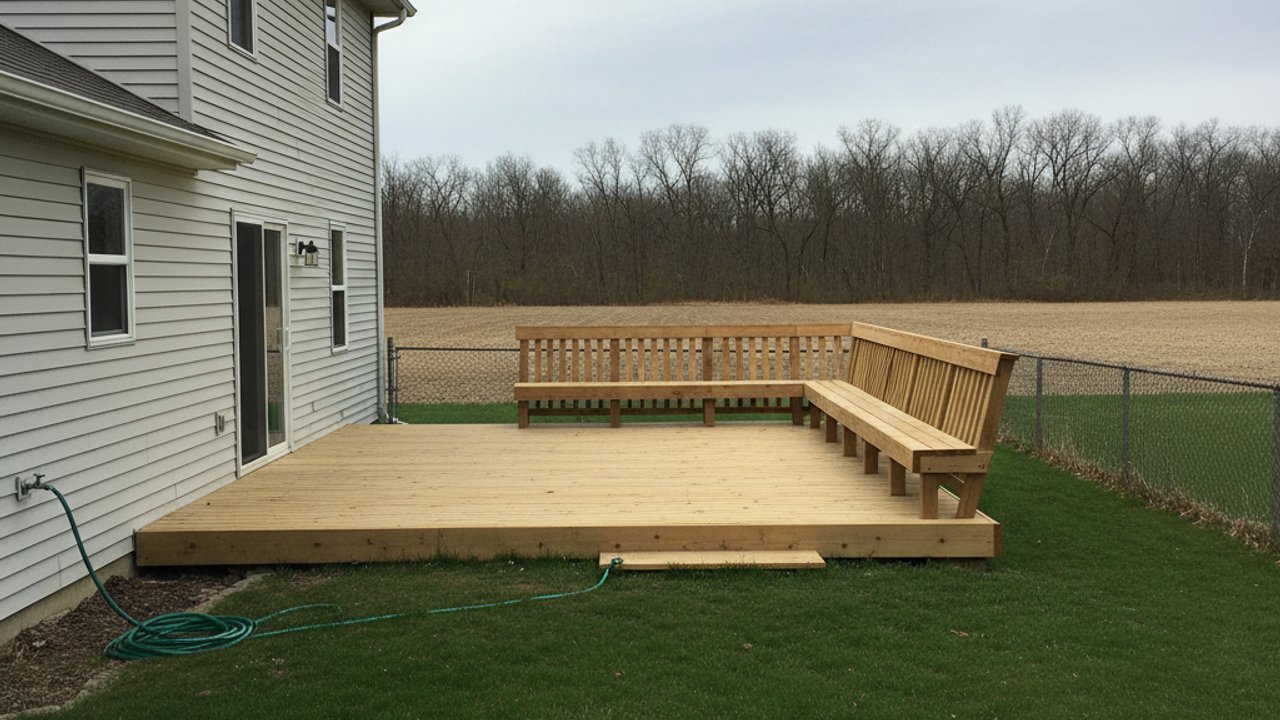
Some decks just need to be a rectangle off the back door, and that's fine. Others want a second level for the grill, a built-in bench along the rail, or stairs that land somewhere other than the middle of the yard. We'll draw the options and price them before you commit to lumber.
Boards cup, rails get loose and ledger boards rot where flashing failed years ago. We replace what's actually bad instead of tearing off a deck that's structurally fine but looks tired. If the joists are soft or the ledger's pulling away from the house, that gets fixed first.
Bare pressure-treated wood grays and splits within a couple seasons if nobody seals it. We pressure wash first, let the wood dry a couple days, then apply a penetrating stain, not a film-forming paint that peels. Plan on redoing this every two to three years depending on sun exposure.
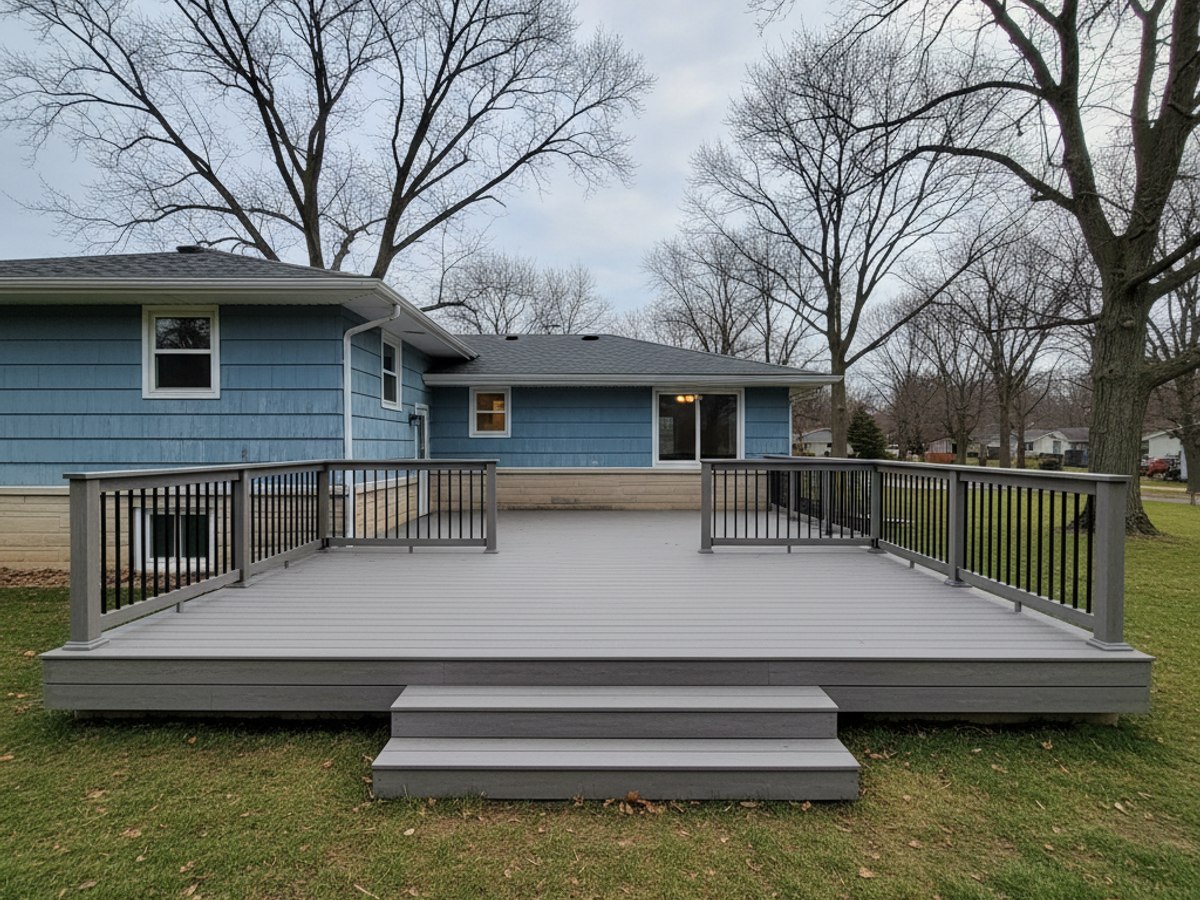
Composite boards don't splinter or rot, but they still call for the same joist spacing and hidden fastener systems to look right. We run joist tape under the boards to keep moisture off the framing lumber underneath. It costs more than pressure-treated up front, and you get that back in the maintenance you don't do.
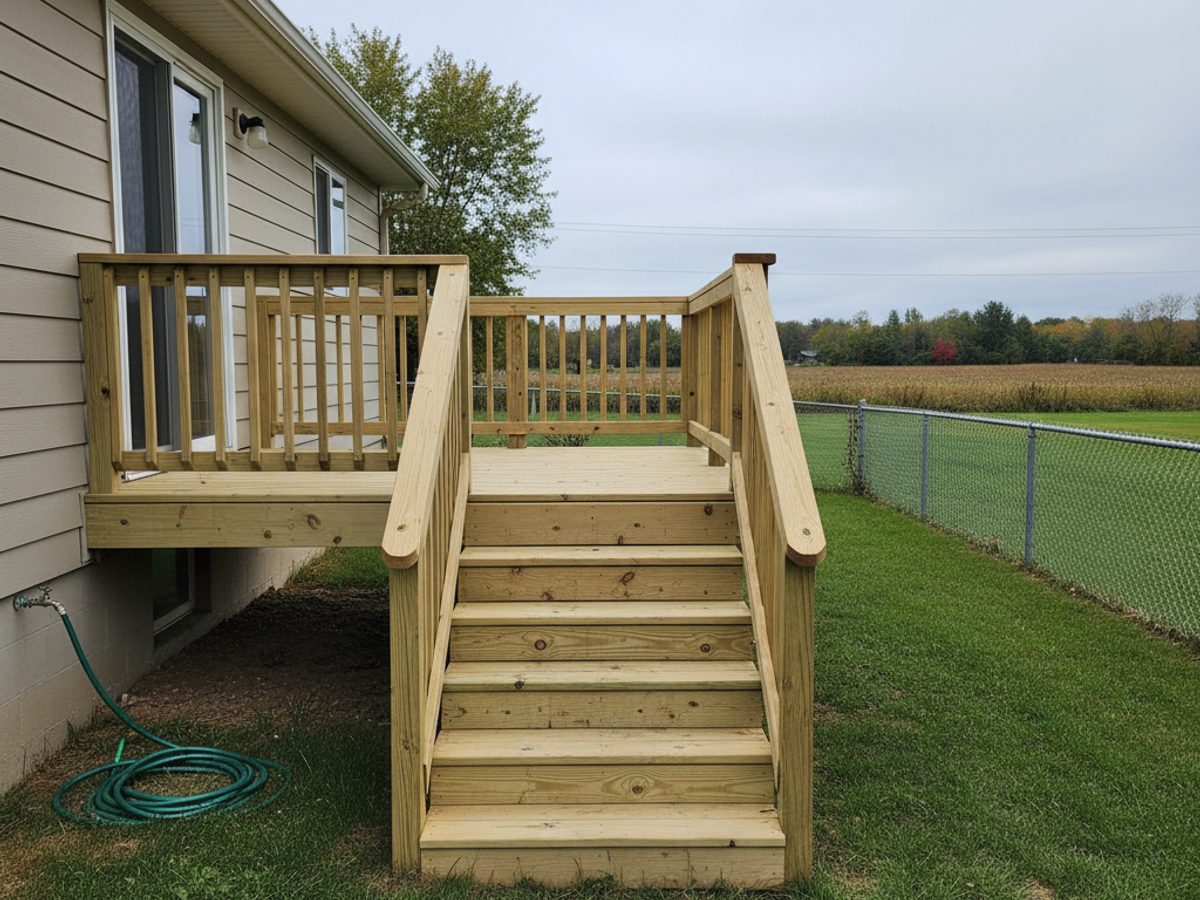
Wisconsin code wants a 36-inch rail height on residential decks and baluster gaps a 4-inch sphere can't pass through. We build to that whether the inspector shows up or not, because a loose rail is the part of a deck that actually hurts someone. Wood, cable or composite rail systems, we'll match whatever the deck boards are.
Sometimes the frame is solid and it's just the decking that's shot, cupped or gray past saving. We pull the old boards, check the joists underneath while they're exposed, and lay new decking on the same frame. Cheaper than a full rebuild if the structure checks out.
Old decks come down before a new one goes up, and sometimes that's the whole job. We haul the lumber, disconnect it clean from the ledger board, and leave the siding and flashing in decent enough shape to build against again.
A screened porch uses the same footings and framing as a deck, with a roof and screen panels added on top. It keeps the bugs out and gives you a room you can use from May through October without weather getting underneath.
If you bought a house with a deck already on it, or you're not sure the one you have is still sound, we check the ledger connection, the footings, the joists and the rail for the things that actually fail. You get a straight answer on what's fine, what wants attention this year, and what can wait.
Four steps, and no surprises in any of them.
You tell us what you want doing, we look at what is actually there, and we ask the awkward questions early.
In writing, itemised, free. If something might add cost later we flag it now rather than at the end.
Same crew throughout. We cover your floors, keep the dust down and tidy up before we leave each day.
You point out anything you are not happy with and we fix it before the invoice, not after.
Deck installation and repair are available throughout the greater Milwaukee area.
Questions that come up once a deck project is actually underway.
Describe the problem and we will tell you what it probably is. No obligation.